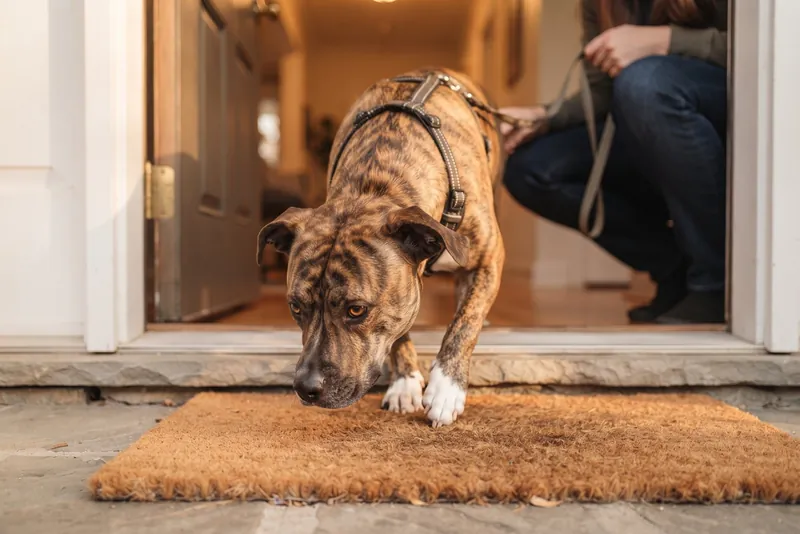
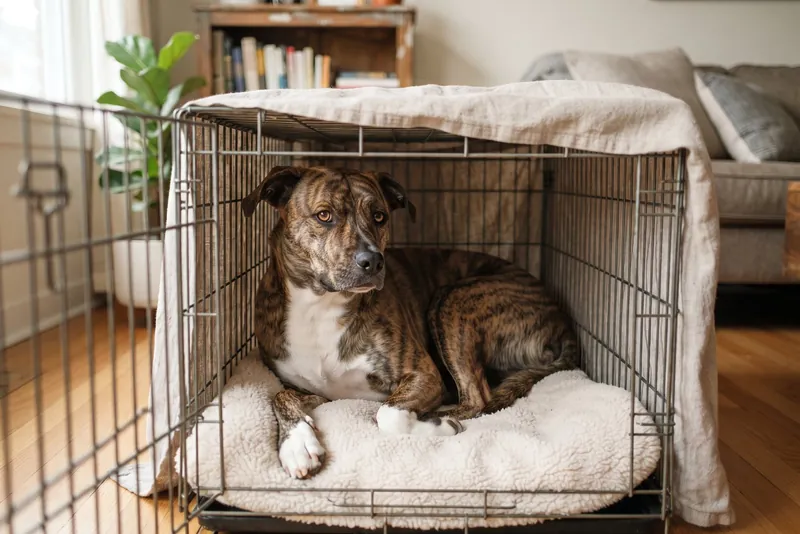
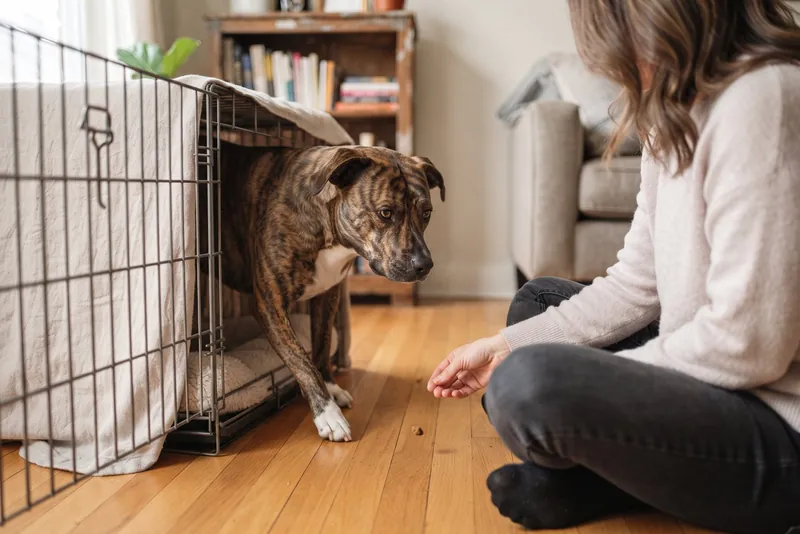
Where you're heading: a dog who can switch off and rest.
Printable PDF · 35 pages
Rescue Dog Settling-In Plan
A gentle, day-by-day plan for a rescue dog's first 30 days, and a roadmap to month 3. Each day is one small step, with a guide page that explains how, and permission to repeat it or make it easier when your dog needs more time.
Delivered by email. Your download link arrives within minutes of checkout.
Print at home. Sized for US Letter, with clickable contents on screen.
Reward-based only. No force, no scolding, no corrections.
What's included
A start-here page to see which sections your dog needs first
15 guide pages, from house training to fears
30 day steps, then weeks 5 to 12
Toilet tracker, fear ladder worksheet, alone-time and health logs
Month 1, 2 and 3 reviews
The free Rescue Dog Trust Log, included
Four weeks, one small step a day
30 steps, not 30 deadlines. Plenty of dogs take two or three months to get through them, and that's fine.
Days 1 to 7
Week 1: Decompress
Help your dog feel safe and ask for nothing. A quiet house, a toilet routine, the name game, and the first steps toward a crate or gated area they choose for themselves.
Days 8 to 14
Week 2: Routine
Every day becomes predictable, so your dog can relax into it. Set times for meals and walks, a hand target, meeting the family, and the first few seconds alone.
Days 15 to 21
Week 3: Confidence
Small, positive new experiences at your dog's pace: a new sniff route, gentle handling, and the first easy step on one fear.
Days 22 to 30
Week 4: Real life
Ease into what normal life needs: the vet, grooming, a calm visitor, the car and a little more time alone. Then a roadmap for weeks 5 to 12.
Every day is one small step
Each step points to the guide page that explains it, and each one can be repeated or made easier. Here's day 13.
One step. A few minutes, built into your normal day.
The how, one page away. Every step links to its guide.
Your dog sets the pace. Repeat it, make it easier, or move on.
A line for how it went. And a short review at the end of each week.
Week 2 · Routine · Day 13
A few seconds alone
With a chew down, step behind a gate for only as long as your dog stays relaxed. Even a few seconds counts. Come back calmly, with no big hello.
From the alone-time guide
Practice in the house first, behind a gate.
Pick up your keys and sit back down, so they stop meaning "leaving."
Add time only after a few relaxed tries in a row.
Record it, and note when the first sign of worry appears.
If it was hard. Repeat the day, or go back to a length your dog managed easily. That's the plan working, not failing.
Signs it's more than nerves. Howling that goes on, chewing at doors, or trying to escape can be separation anxiety. The guide explains when to talk to your vet.
Also inside
Start here
A page to record what you know about your dog, and a table that tells you what to read first.
15 guide pages
House training, a crate or gate, alone time, walking, cues, handling, visitors, other pets and fears.
Trackers and worksheets
A 14-day toilet tracker, a fear ladder worksheet, and alone-time, walks and health logs.
The Trust Log, too
Our free 12-page log for the small wins comes with the plan.
Before you buy
My dog has been home a few weeks. Is it too late?
No. Fill in the start-here page, then begin at day 1 anyway. Steps your dog finds easy will go quickly.
My dog is already house-trained. Is this still for me?
Yes. Many rescue dogs are. The start-here page helps you skip what your dog doesn't need and focus on trust, alone time, handling and fears.
Do I need a crate?
No. Every crate step works the same way with a gated area or a dog-proofed room.
Is this a replacement for a vet or behavior professional?
No. It's general, reward-based help written by an owner who has been there. It tells you when to call your vet or a certified behavior consultant, and how to find one.
What if it isn't right for my dog?
Every paid guide has a 30-day money-back guarantee. If it isn't right for you or your dog, email us and we'll refund you in full. No need to give a reason.